

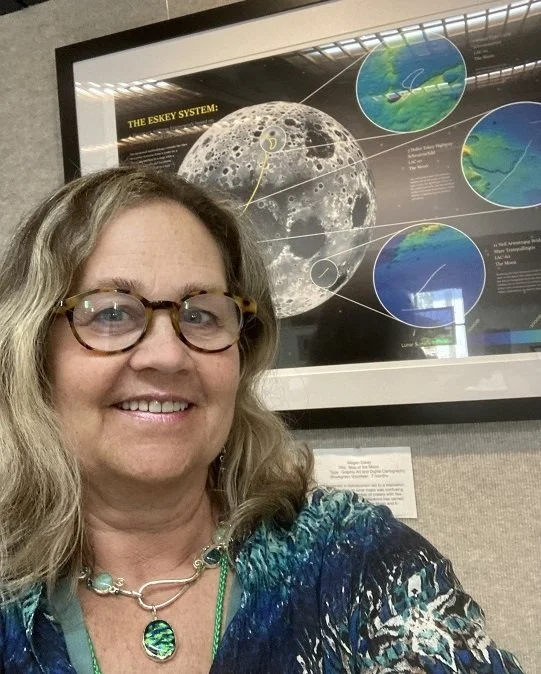
Meet the Founder
Megan Eskey
We're not here to follow trends—we're here to build something timeless. With a blend of creativity, strategy, and heart, we help planetary cartography come to life.
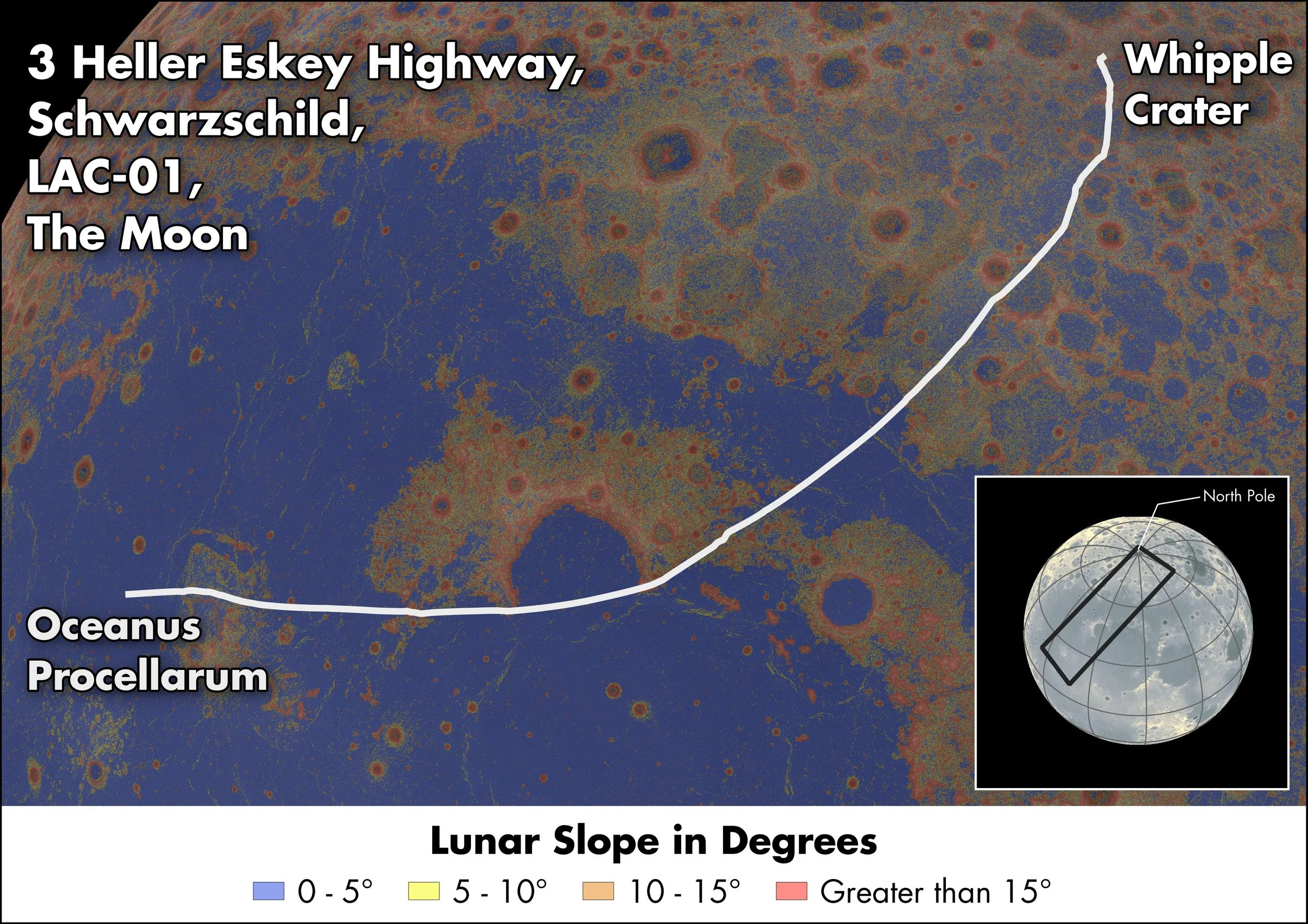
We have defined a syntax for planetary addresses and a lexicon for the first roads in space. We are constructing a language for space roadbotics, in our collective quest to become a multiplanetary species.
The space roadbotics end game won’t be played in boardrooms, but rather in space agencies around the world. The next space race may literally be that: a race along the surface of the Moon.
Naming the Planetary Roads
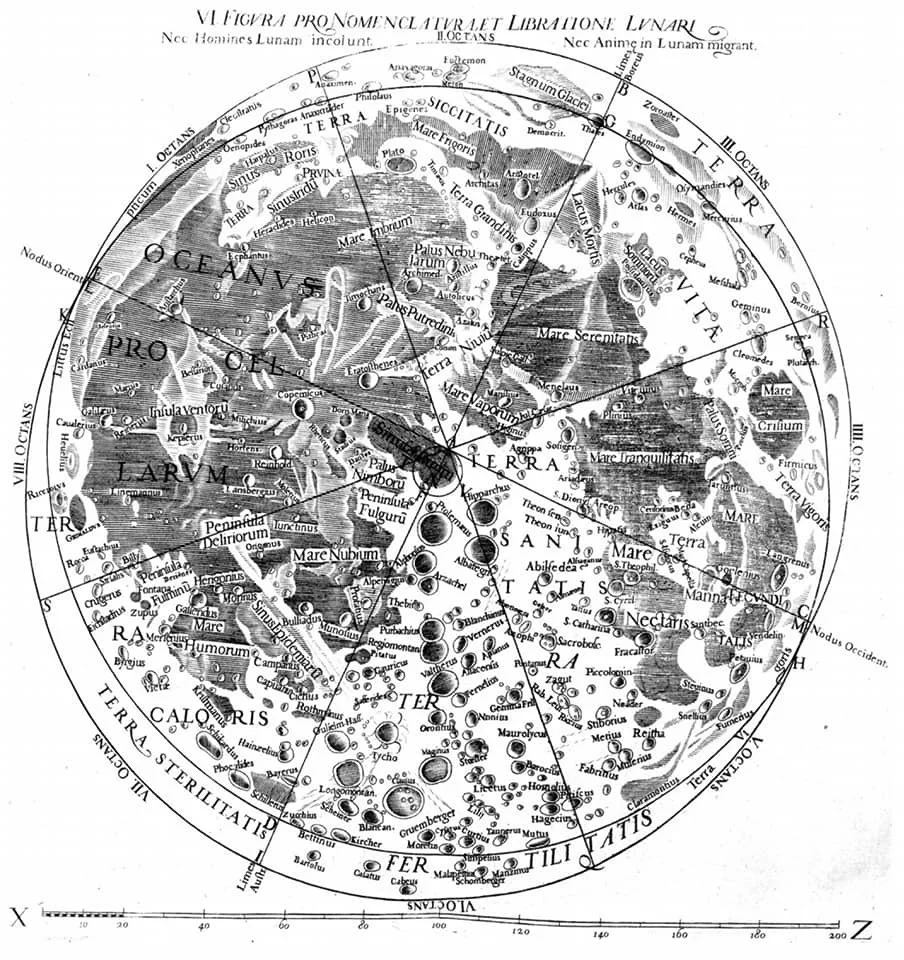
In the June 2023 Astrogator, I contributed an article that discussed the software options for creating a digital map of the Moon and Mars. I mentioned a system of planetary addresses based on low slope routes and quadrangles. One additional consideration is the creation of nomenclature guidelines to help inform the names of the newly charted planetary roads. We have a historical precedent in the creation of the first lunar map with named features by Giovanni Battista Riccioli and Francesco Maria Grimaldi in 1651, about 50 years after the invention of the telescope.

The Caves and Canyons of Mars: Charting Optimal Roads Using the Eskey System
How many miles of planetary roads would we need on the Moon and Mars? I’ve estimated ~190K miles of roads on the Moon and ~280K miles on Mars. On Earth, roadbotics companies provide a service to governments around the world to objectively manage their road networks using artificial intelligence. In space, roadbotics might include autonomous rovers that are better, faster and cheaper with only one purpose: to leave their tracks for future explorers. Some of the Mars rovers leave their names in the tracks. In the image above, holes in Curiosity’s tire treads spell out JPL (Jet Propulsion Laboratory) in Morse code.
A Perfect Catch
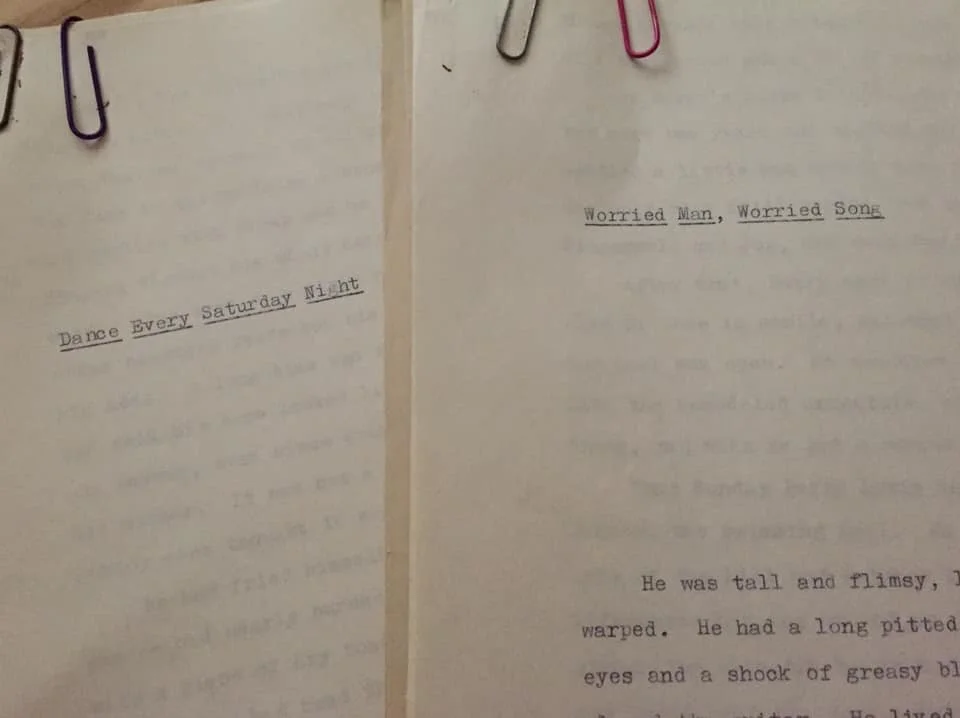
I spent the pandemic in Carmel Valley, walking distance to Del Mar, one of the most spectacular beaches in San Diego. It was during the lockdown that I finally found the time to transcribe my father’s stories, mostly typewritten, with comments handwritten in red and green pencil by Joseph Heller, author of Catch-22. It was a well-timed experience, as I was feeling lost and adrift in an environment that didn’t make much sense for me. It was a grounding experience, and wonderful to hear his voice again after so many years.
The Great Gatsby and the Maui Baldwins
Much more in the style of East Egg restraint than West Egg excess, in 2017, the Maui Baldwins put their house at the top of Olinda Road up for sale, and two years later, in March 2019, it sold for $3.1M. In January 2021, the copyright expired on The Great Gatsby, opening the door to many more adaptations, sequels and prequels. Let’s take a walk further down memory lane to the roaring 20s, and visit Gatsby’s estate in West Egg.
The Eisenhower Eight
Dave Ellas was also a character in a story called Ono. Ono was completely handwritten, whereas the other stories were typed. Comments from Joseph Heller were written in green and red pencil in the margins of some of the stories, but there were no comments on Ono. My best guess is that the story was written while my father was a student in Dr. Christie's class, who took over teaching English Composition after Heller started writing Catch-18 in 1953.
How High the Moon
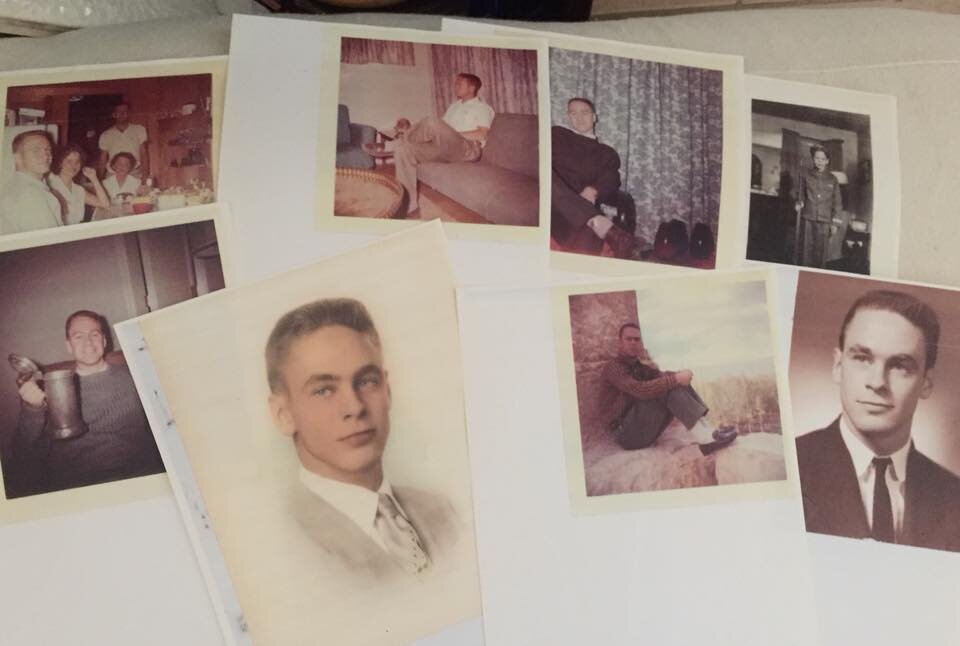
The year was 1952 and Dwight David Eisenhower was elected President of the United States in November, beating Governor Adlai Stevenson. My father, David Ellsworth Eskey, was a student at Penn State at the time, learning to write fiction from his English Composition teacher, Joseph Heller. Heller would later go on to write Catch-22.. Heller had by then introduced my father to his literary agent, Elizabeth McKee. Mavis McIntosh and Elizabeth McKee had started their own agency, and had advised my father to keep working on his stories, which showed promise, but were still too "fragmentary" to be marketable, in their estimation. The Madams McIntosh and McKee represented the likes of Flannery O’Connor, John Irving, John Steinbeck, and Edna O’Brien, so Heller and my father were in very good company.