

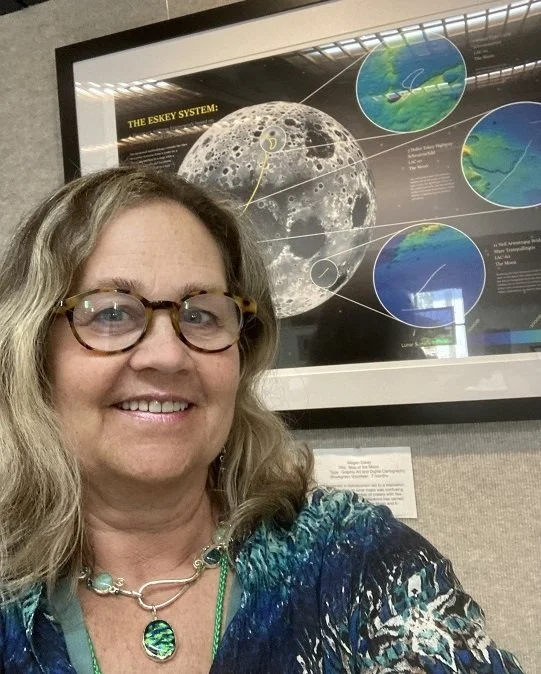
Meet the Founder
Megan Eskey
We're not here to follow trends—we're here to build something timeless. With a blend of creativity, strategy, and heart, we help planetary cartography come to life.
We have defined a syntax for planetary addresses and a lexicon for the first roads in space. We are constructing a language for space roadbotics, in our collective quest to become a multiplanetary species.
The space roadbotics end game won’t be played in boardrooms, but rather in space agencies around the world. The next space race may literally be that: a race along the surface of the Moon.

Q & A with Charles Cormier
When did you realize you were playing a completely different game than everyone else?
I was amazed to discover that there were no historical precedents for the planetary road maps. At no time in history has another human made maps of the Moon and Mars that include a system of roads. Why not? Even the early astronomers could have made rudimentary maps by drawing routes between the landforms that they viewed through their lenses. Certainly during the Apollo era, while men on rovers were roaming the surface of the Moon, I would have expected to see a proposed system of roads at the various lunar landing sites. Space mining is still a ways off, but that is another target market for planetary roads, yet no one else is playing in my sandbox.
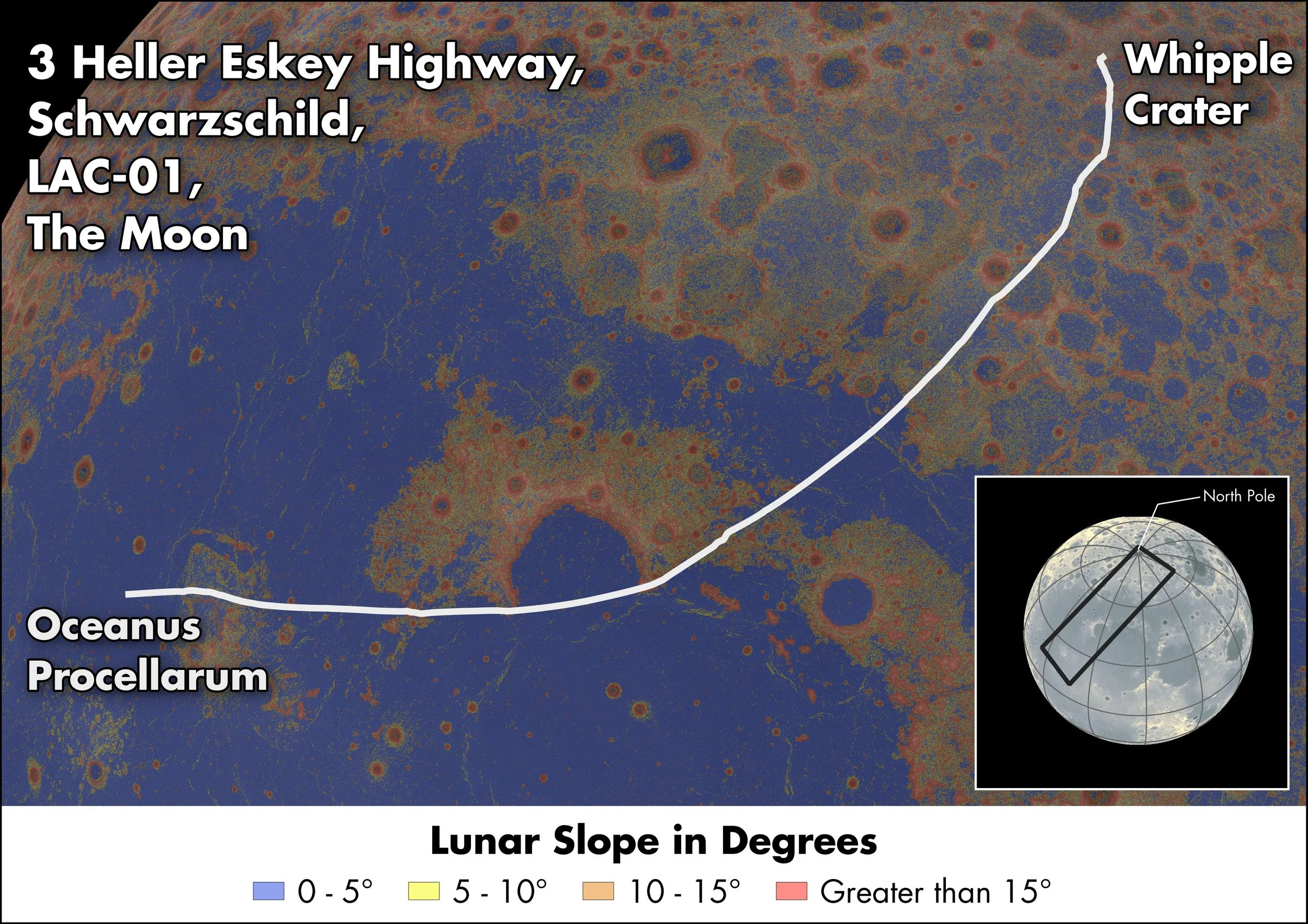
A Perfect Catch
I spent the pandemic in Carmel Valley, walking distance to Del Mar, one of the most spectacular beaches in San Diego. It was during the lockdown that I finally found the time to transcribe my father’s stories, mostly typewritten, with comments handwritten in red and green pencil by Joseph Heller, author of Catch-22. It was a well-timed experience, as I was feeling lost and adrift in an environment that didn’t make much sense for me. It was a grounding experience, and wonderful to hear his voice again after so many years.